How a singular garment transcended its athletic function to become the definitive canvas of modern class identity, splitting the inheritance of global style between French utilitarianism and American mythmaking.
The Crocodile on the Court
In the early 20th century, the world of tennis was a far cry from the modern, performance-driven sport we know today. Players were bound by a rigid dress code that prioritized high-society formality over athletic function. Men competed in what was known as "tennis whites," which consisted of long-sleeved, starched white button-down shirts, often worn with ties, and heavy flannel trousers. This cumbersome attire, while in keeping with the Edwardian era's sartorial standards, severely restricted movement and offered little in the way of comfort, particularly during grueling multi-hour matches under the mid-day sun.

Enter René Lacoste, a dominant force in the tennis world during the 1920s. A multiple Grand Slam winner and a legendary member of the famed "Four Musketeers" of French tennis, Lacoste was an intensely meticulous and forward-thinking athlete. He understood that the restrictive clothing of the time was a significant hindrance to performance. The stiff fabric and long sleeves of the traditional tennis shirt trapped heat and hampered the fluid motions essential for a powerful serve or a swift backhand.
Driven by a desire for a more practical and comfortable alternative, Lacoste set about designing a new type of tennis shirt. He envisioned a garment that would allow for greater freedom of movement and breathability. Drawing inspiration from the short-sleeved, collared shirts worn by polo players in London, he developed his own innovative design.
The shirt that Lacoste conceived was revolutionary in its simplicity and absolute functionality. He crafted it from a lightweight and breathable petit piqué cotton, a knitted fabric with a distinctive textured pattern that allowed air to circulate, keeping the wearer cool. He shortened the sleeves to free the arms, a radical departure from the long-sleeved tradition. The stiff, formal collar was replaced with a soft, ribbed collar that could be turned up to protect the neck from the sun. Finally, he incorporated a three-button placket, which could be undone for added ventilation, and designed the shirt with a longer tail in the back—a feature now known as a "tennis tail"—to prevent it from becoming untucked during vigorous play.
Lacoste first debuted his creation at the 1926 U.S. National Championship, and it immediately caught the eye. The comfort and practicality of his design were undeniable. The iconic crocodile logo, now synonymous with the Lacoste brand, has its own unique origin story. In 1923, during a Davis Cup tie in Boston, Lacoste made a bet with his team captain over a crocodile-skin suitcase. An American journalist who overheard the story began referring to Lacoste as "The Alligator," a nickname that was later changed to "The Crocodile" by the French press, perfectly capturing his tenacity on the court. Lacoste embraced the moniker and had a small crocodile embroidered on the blazers he wore before his matches.
The Master of Aspirational Myth
Before the world knew the aspirational, Americana-infused aesthetic of Ralph Lauren, there was Ralph Lifshitz, a young man from the Bronx. The story of how he transformed his identity and built a multi-billion dollar fashion empire is a masterclass in branding, tapping into the allure of an elite lifestyle and making it a symbol of accessible luxury.

Born to Ashkenazi Jewish immigrants, Ralph and his brother Jerry faced teasing for their last name. At the age of 16, they made the pivotal decision to change their surname. The choice of "Lauren" was not an immediate path to the preppy aesthetic he would later champion, but it was a crucial first step in crafting a new persona, one that sounded more in line with the classic, old-money cinematic world he admired from afar.
Lauren's foray into fashion began not with a grand apparel design, but with a simple necktie. While working for a tie manufacturer, he saw an opportunity to create wider, more vibrant and flamboyant ties that stood in stark contrast to the narrow, drab styles of the late 1960s. In 1967, he launched his own line of these ties under a brand name that would become the cornerstone of his global empire: "Polo."
The choice of "Polo" was a stroke of absolute marketing genius. Lauren himself had no deep personal connection to the sport of polo; rather, he was drawn to its association with a world of old-money, athleticism, and classic elegance. He understood that the name "Polo" evoked a sense of heritage and elite sophistication that would resonate with consumers who aspired to that lifestyle.
Building on the success of his ties, Lauren expanded into comprehensive menswear, and in 1972, he introduced his version of the short-sleeved, collared shirt that would become his brand's permanent signature item. While René Lacoste had invented the shirt for tennis decades earlier, it was Lauren who cemented its association with the "polo" name and lifestyle. He marketed his version of the shirt, emblazoned with the now-iconic logo of a polo player on horseback, in a wide array of colors. This shirt, which he simply called the "Polo shirt," became the quintessential piece of his growing brand.
The Anatomy of Two Legacies
The evolution of the polo shirt reflects a perfect dichotomy in the luxury fashion ecosystem. While one founder engineered the garment to solve an immediate physical limitation on the courts of France, the other utilized the garment as a visual passport to an idealized American aristocracy.
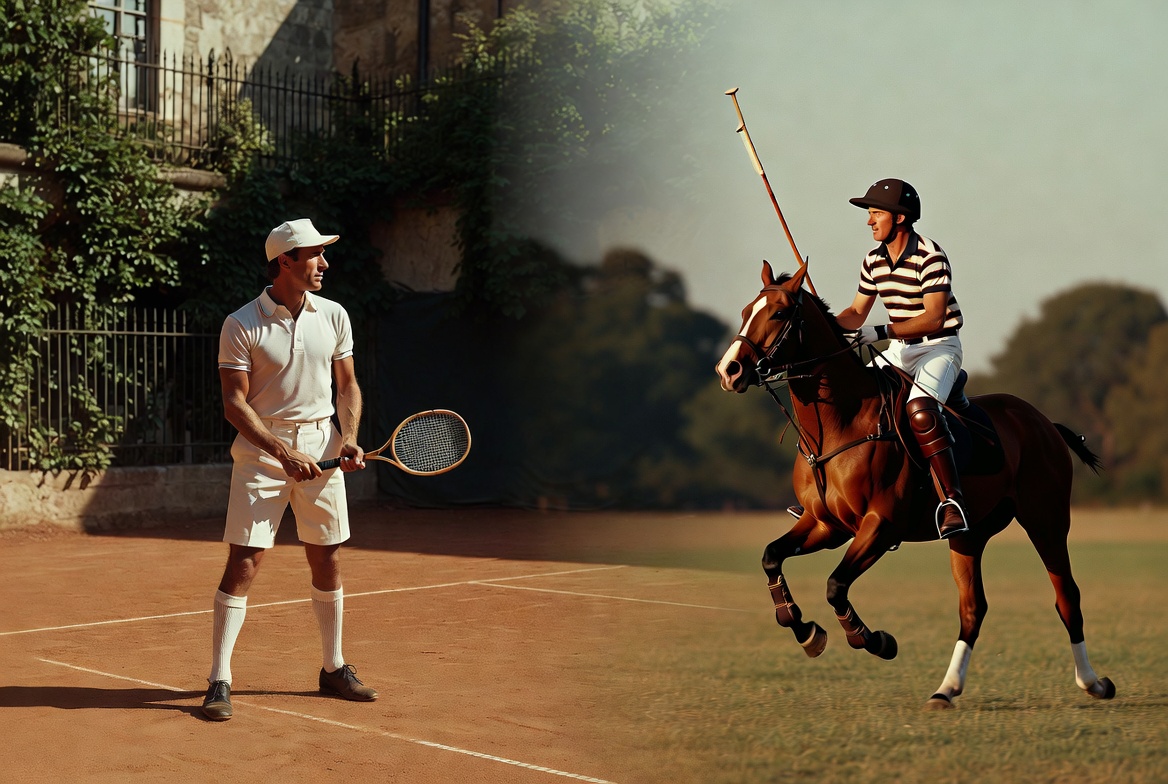
Lacoste: The Functionalist
- Origin: The clay courts of Roland Garros
- Core Ethos: Technical liberation and movement
- Visual Identifier: The bold, disruptive exterior mascot
- Fabric Innovation: Knitted Petit Piqué Cotton
- Legacy: Performance as the new luxury
Lauren: The Narrative Myth
- Origin: The cinematic imagination of the Bronx
- Core Ethos: Democratic access to high-society heritage
- Visual Identifier: The elite, classical horseman emblem
- Color Strategy: Broad spectrum identity tailoring
- Legacy: Aspiration as the ultimate product
The Silhouette That Crossed Worlds
What began as a technical solution on French clay and a branding masterstroke in American boardrooms did not stay confined to country clubs. The polo shirt became one of the most potent cultural signifiers of the late 20th and early 21st centuries — particularly within hip-hop and global streetwear.
In the hands of a new generation of tastemakers, the same garment that once signaled inherited privilege was recontextualized as armor of self-made success. Ralph Lauren’s meticulous construction of an aspirational dream found its most unexpected and powerful validation not in the Hamptons, but in the Bronx, Queens, and South Central — places where wearing the right color Polo, the right fit, the right year, communicated status, taste, and belonging more viscerally than any boardroom ever could.
Lacoste’s original promise of liberation through intelligent design found new expression in the way the shirt moved — from court to concrete, from function to flex. Both men, in their own way, understood something fundamental: people don’t just wear clothes. They wear the stories those clothes allow them to tell about themselves.